 THE MAGGIE MARSHALL TEAMLet’s connect

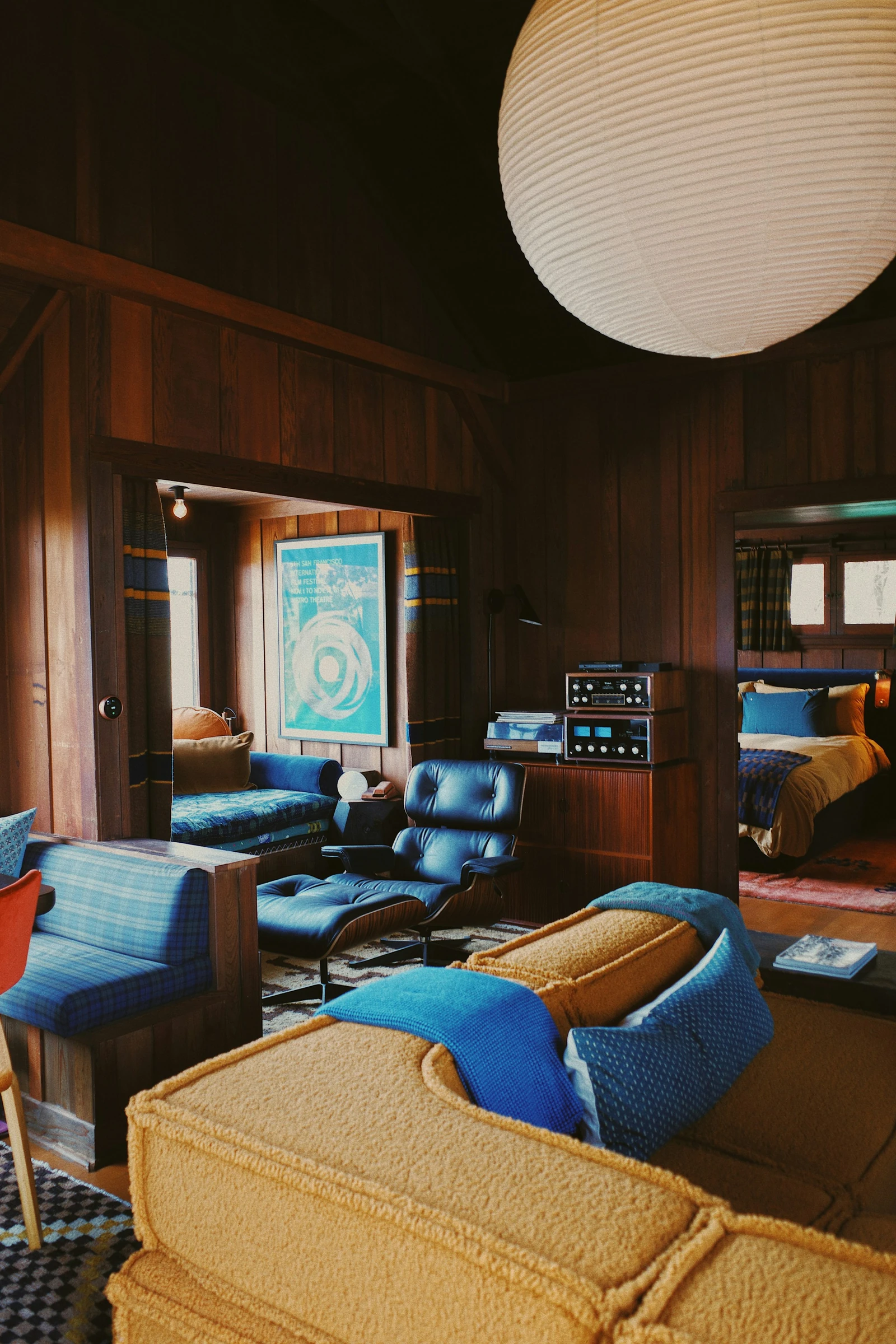
A reading lamp earns its place when the light reaches the page. The shade can be beautiful, the base beautifully made, and the arrangement still fail if the bulb shines into the reader’s eyes or leaves the book in shadow. Before choosing a new fixture, sit in the chair where it will be used. Open a book. The first decision belongs to that small patch of paper.
This is a useful place to begin thinking about a room after dark. Daylight gives way to a set of choices: what needs to be clearly visible, what deserves attention, and where a quieter background would be welcome. An apartment does not need every surface lit with equal emphasis. It needs enough light for the life taking place inside it.
Give each light a job
Lighting designers commonly separate those jobs into ambient, task and accent light. In Lutron’s guide, ambient light provides general illumination; task light serves a particular activity; accent light draws attention to something worth looking at. These are purposes rather than three mandatory shopping purchases. A room’s layout, furnishings and uses should determine how they are supplied. 1
For a living room, make a short inventory of actions before making a list of lamps. Where do you read? Which seat is used for a laptop? Where do guests put a glass? Start with the places that are difficult to use in the evening, then consider the view from the doorway. This gives the lighting plan a practical order and keeps an attractive object from becoming an expensive answer to the wrong question.
A lamp beside a chair can address the page; an adjustable light can serve a desk. Lutron’s guidance specifically considers the position of the person using the light and identifies under-cabinet lighting as an option for kitchen tasks. The principle travels well between rooms: put the useful light near the work, and assess it from the position in which that work happens. 1
Once those needs are met, choose one place for the eye to rest. It might be a picture, a shelf or the texture of a wall. Try lighting that area and then stepping back. If every object receives the same emphasis, the selection has lost its point. There is no obligation to make an apartment look like an exhibition.
Read the bulb as carefully as the shade
The numbers on a bulb’s box describe different things. Lumens indicate light output; watts describe energy use. The Federal Trade Commission gives the familiar example of a traditional 60-watt incandescent bulb producing about 800 lumens. An LED can provide comparable output while using less power. Compare lumens when deciding how much light you want, then check the fixture’s own requirements before buying. 2
Color temperature is another decision. The Department of Energy explains that a lower Kelvin number describes warmer-looking light, while a higher number describes a cooler, bluer appearance. The Lighting Facts label places light appearance alongside output and energy use, so warmth and brightness can be considered separately. A warm-looking bulb need not be a dim one. 3
For an evening sitting area, try a warm-white option such as 2700K as a starting point, then judge it in the actual room. This is a design preference, not a universal prescription. Bring the fabrics, wall color and lampshade into the test. A bulb that looks agreeable in one fitting may not produce the effect you want across the room.
Color temperature also does not tell you everything about how objects will appear. DOE distinguishes the appearance of the light itself from color fidelity: how faithfully it renders the things being lit. Its guidance describes a color rendering index, or CRI, of 90 or higher as excellent fidelity, while explaining that the metric has limitations. Where fabric or artwork matters, ask about color rendering as well as warmth. 4
Let the evening have more than one setting
A table used for work at six may be used for dinner later. It helps to plan the two situations explicitly. Which light needs to stay useful? Which could recede? Try the combinations you already have before assuming the room needs more fittings. Sometimes the better arrangement begins with switching one off.
Dimming deserves a compatibility check. Lutron’s technical guidance recommends tested pairings of dimmable LED bulbs and its dimmers, and directs readers to the bulb manufacturer when a combination is not listed. Ask the supplier to confirm the particular bulb, fixture and control together. The word “dimmable” alone is not the whole specification. 5
A dim-to-warm product adds a separate effect: its light becomes warmer as output falls. DOE distinguishes this behavior from systems that allow brightness and color temperature to be adjusted independently. Decide which experience you want rather than assuming all dimming behaves alike. A sample at the intended evening setting is more useful than a promising name on the box. 6
Finish from the chair
Make the final inspection at the hour the room will be used. Look from the sofa, the dining chair and the doorway. Is the light landing where it should? Can you see a bright bulb that would be better screened by its shade? Does a reflective surface send light back toward you? Move an adjustable lamp, try another setting, and observe one change at a time.
The result need not be elaborate. Keep a brief record of the bulbs and settings that work, especially when replacing several at once. A considered room after dark is built from small, repeatable decisions: a readable page, a useful table and enough light to move comfortably between them. Let the beautiful lamp do its part in that arrangement.